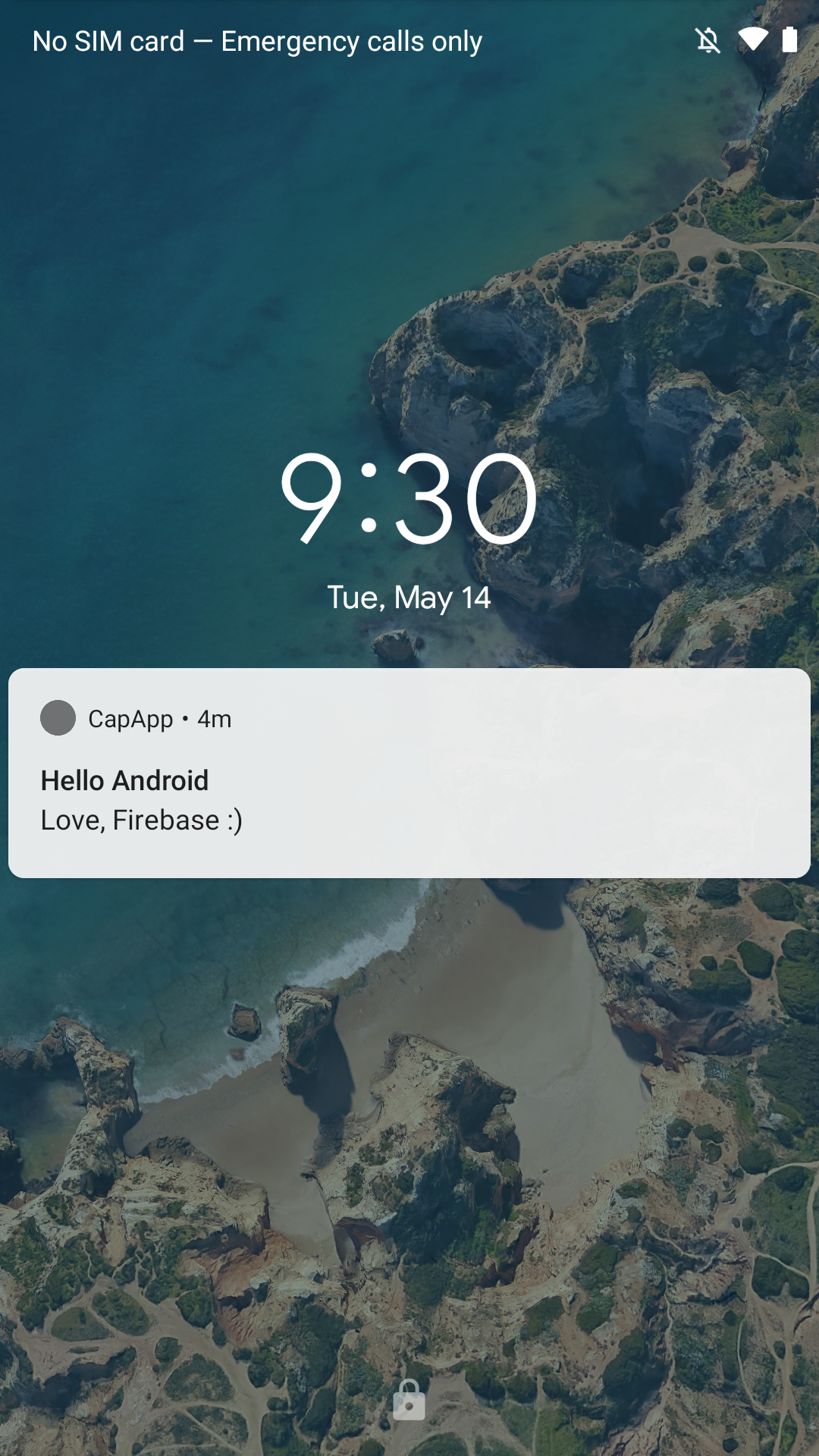
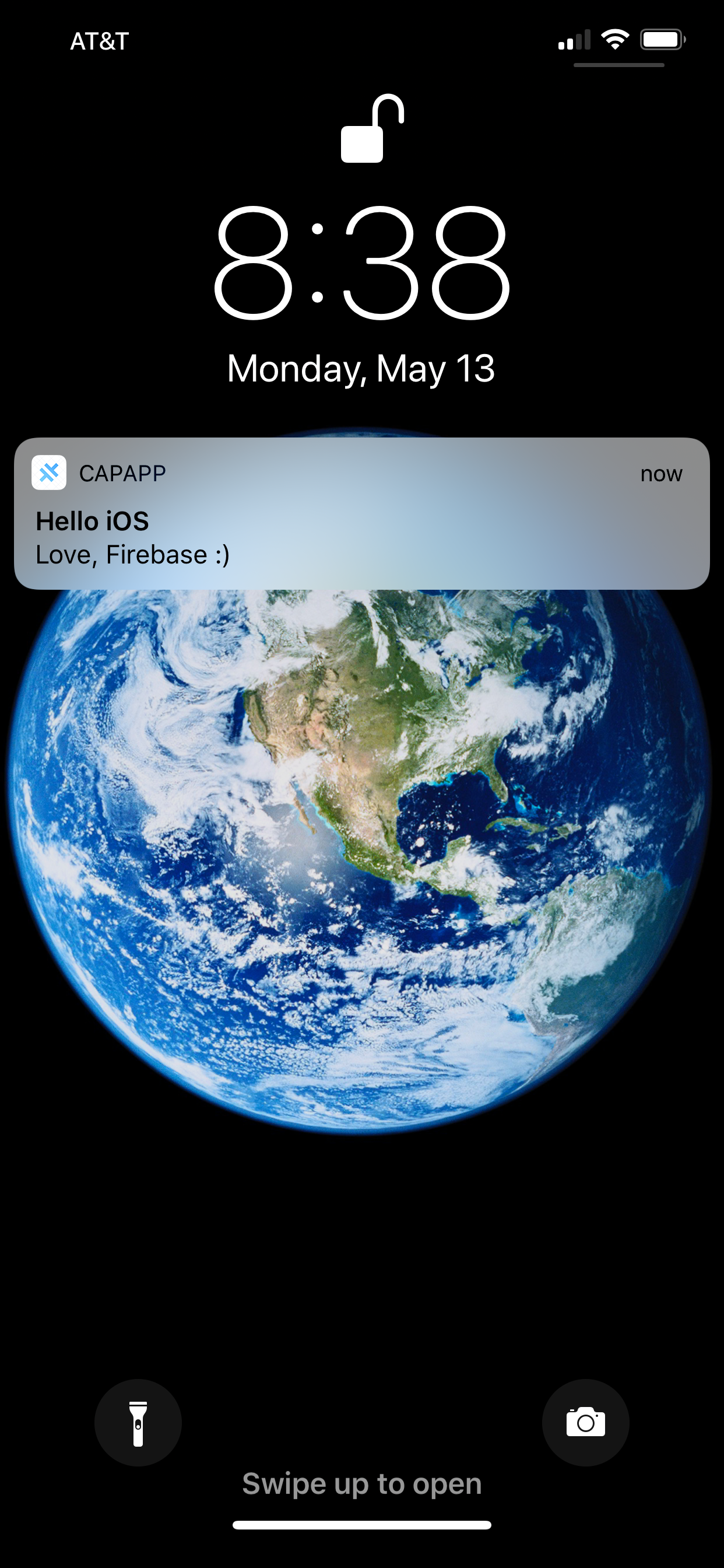
在 Ionic + Angular 应用中使用 Firebase 推送通知
Web 框架:Angular 平台:iOS、Android
应用程序开发者向其用户提供的最常见功能之一是推送通知。在本教程中,我们将逐步介绍让 Firebase Cloud Messaging 在 iOS 和 Android 上工作所需的所有步骤。
为了注册和监控来自 Firebase 的推送通知,我们将在 Ionic + Angular 应用程序中使用 Capacitor 的 Push Notification API。
所需依赖项
使用 Capacitor 构建和部署 iOS 和 Android 应用程序需要一些设置。在继续之前,请 按照说明安装必要的 Capacitor 依赖项。
要在 iOS 上测试推送通知,Apple 要求您拥有 一个付费的 Apple Developer 帐户 和一台 物理 iOS 设备。
如果您遇到问题或控制台抛出有关过时或废弃包的警告,请确保您使用的是 Node、Android Studio 和 Xcode 的最新稳定版本。
另外,我们使用 Firebase 进行推送通知,因此如果您使用使用 Firebase SDK 的其他 Cordova 插件,请确保它们使用最新版本。
准备 Ionic Capacitor 应用
如果您已有 Ionic 应用,请跳过此部分。如果没有,我们先创建一个 Ionic 应用。
在您喜欢的终端中,安装最新版本的 Ionic CLI:
npm install -g @ionic/cli
接下来,让我们使用 CLI 基于 blank 启动项目创建一个新的 Ionic Angular 应用,并将其命名为 capApp:
ionic start capApp blank --type=angular
在提示将您的新应用与 Capacitor 集成时,输入 y 并按回车。这会将 Capacitor 和 Capacitor CLI 添加到我们的新应用程序中。
成功创建应用程序后,切换到新创建的项目目录:
cd capApp/
最后运行 npx cap init,这将允许我们填写应用信息。
npx cap init
? App name: CapApp
? App Package ID: com.mydomain.myappname
构建应用和添加平台
在向此项目添加任何原生平台之前,必须至少构建一次应用。Web 构建会创建 Capacitor 所需的 web 资源目录(Ionic Angular 项目中的 www 文件夹)。
ionic build
接下来,让我们为应用添加 iOS 和 Android 平台。
npx cap add ios
npx cap add android
运行这些命令后,项目根目录下会创建 android 和 ios 文件夹。这些是完全独立的原生项目制品,应被视为您的 Ionic 应用的一部分(即,将它们检入版本控制)。
使用 Capacitor Push Notification API
在讨论 Firebase 之前,我们需要确保我们的应用程序可以通过使用 Capacitor Push Notification API 注册推送通知。我们还将添加一个 alert(您也可以使用 console.log 语句代替)来在通知到达且应用在设备上打开时显示通知的负载。
在您的应用中,转到 home.page.ts 文件,添加 import 语句和 const 以使用 Capacitor Push API:
import {
  Plugins,
  PushNotification,
  PushNotificationToken,
  PushNotificationActionPerformed,
} from '@capacitor/core';

const { PushNotifications } = Plugins;
然后,添加 ngOnInit() 方法以及一些用于注册和监控推送通知的 API 方法。我们还将为其中一些事件添加 alert() 以监控正在发生的事情:
export class HomePage implements OnInit {

ngOnInit() {
    console.log('Initializing HomePage');

    // 请求使用推送通知的权限
    // iOS 将提示用户并返回是否授予权限
    // Android 将直接授予而不提示
    PushNotifications.requestPermission().then( result => {
      if (result.granted) {
        // 向 Apple / Google 注册以通过 APNS/FCM 接收推送
        PushNotifications.register();
      } else {
        // 显示一些错误
      }
    });

    // 成功时,我们应该能够接收通知
    PushNotifications.addListener('registration',
      (token: PushNotificationToken) => {
        alert('Push registration success, token: ' + token.value);
      }
    );

    // 设置有问题,推送将无法工作
    PushNotifications.addListener('registrationError',
      (error: any) => {
        alert('Error on registration: ' + JSON.stringify(error));
      }
    );

    // 如果应用在设备上打开,向我们显示通知负载
    PushNotifications.addListener('pushNotificationReceived',
      (notification: PushNotification) => {
        alert('Push received: ' + JSON.stringify(notification));
      }
    );

    // 点击通知时调用的方法
    PushNotifications.addListener('pushNotificationActionPerformed',
      (notification: PushNotificationActionPerformed) => {
        alert('Push action performed: ' + JSON.stringify(notification));
      }
    );
}
以下是 home.page.ts 的完整实现:
import { Component, OnInit } from '@angular/core';

import {
  Plugins,
  PushNotification,
  PushNotificationToken,
  PushNotificationActionPerformed,
} from '@capacitor/core';

const { PushNotifications } = Plugins;

@Component({
  selector: 'app-home',
  templateUrl: 'home.page.html',
  styleUrls: ['home.page.scss'],
})
export class HomePage implements OnInit {
  ngOnInit() {
    console.log('Initializing HomePage');

    // 请求使用推送通知的权限
    // iOS 将提示用户并返回是否授予权限
    // Android 将直接授予而不提示
    PushNotifications.requestPermission().then(result => {
      if (result.granted) {
        // 向 Apple / Google 注册以通过 APNS/FCM 接收推送
        PushNotifications.register();
      } else {
        // 显示一些错误
      }
    });

    PushNotifications.addListener(
      'registration',
      (token: PushNotificationToken) => {
        alert('Push registration success, token: ' + token.value);
      },
    );

    PushNotifications.addListener('registrationError', (error: any) => {
      alert('Error on registration: ' + JSON.stringify(error));
    });

    PushNotifications.addListener(
      'pushNotificationReceived',
      (notification: PushNotification) => {
        alert('Push received: ' + JSON.stringify(notification));
      },
    );

    PushNotifications.addListener(
      'pushNotificationActionPerformed',
      (notification: PushNotificationActionPerformed) => {
        alert('Push action performed: ' + JSON.stringify(notification));
      },
    );
  }
}
之后,您需要生成新构建并让 Capacitor 知道这些更改。您可以通过以下方式完成:
ionic build
npx cap copy
在 Firebase 上为您的应用创建项目
在将 Firebase Cloud Messaging 连接到您的应用程序并发送推送通知之前,您需要在 Firebase 中启动一个项目。
转到 Firebase 控制台 并点击 Add project 按钮。
命名项目,接受 Firebase ToS 并点击 Create project 继续。项目 ID 将自动为您生成。
Android
将 Firebase 与 Android 应用集成
本节或多或少与 使用 Firebase 控制台文档设置 Firebase 类似。请参阅下面的 Capacitor 相关说明。
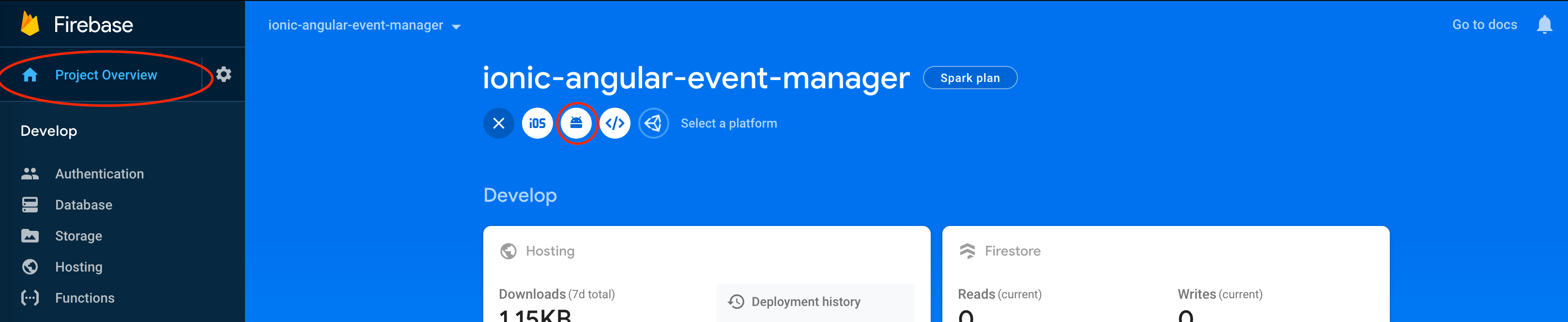
转到您的 Firebase 项目的 Project Overview 页面,在顶部点击 Android 图标以添加新的 Android 应用程序。
下一个屏幕将询问您一些关于应用程序的信息。
- 您的 Android package name 应与
capacitor.config.json中的 appId 匹配 - 我们为此 Capacitor 应用 ID 使用了
com.mydomain.myappname,因此这就是我们将用于此项的内容。 - 昵称和调试签名证书是可选的
然后点击 Register app 按钮。
下载并使用 google-services.json 文件
下一个提示将要求您下载 google-services.json 文件。此文件包含您的 Capacitor 应用从 Android 连接到 Firebase 所需的信息。
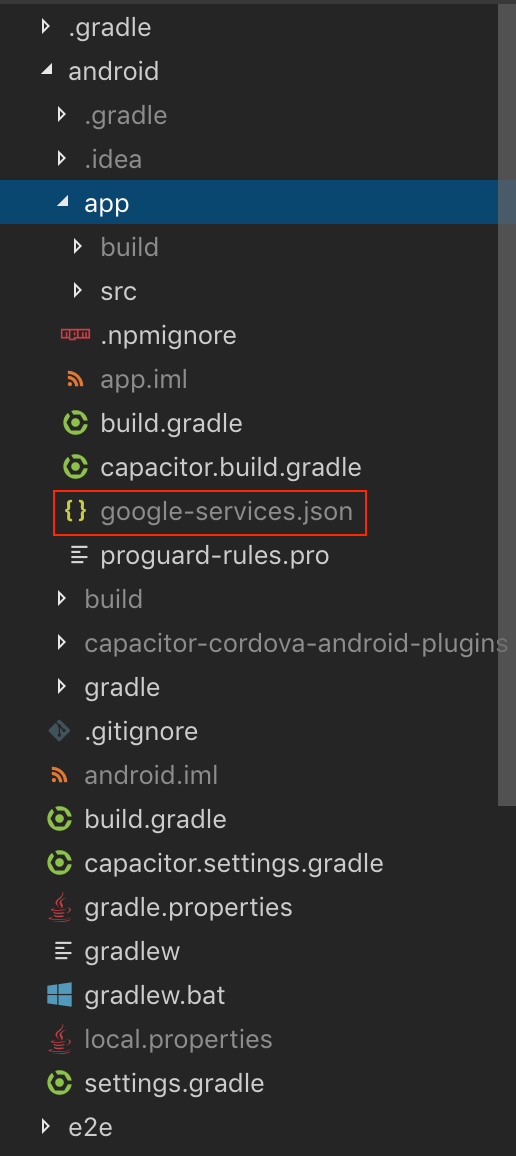
将 google-services.json 文件下载到您的本地机器。然后将该文件移动到您的 Capacitor Android 项目目录中,特别是 android/app/ 下。
我们不需要向项目 添加 任何依赖项,因为 Capacitor 项目在其 build.gradle 文件中自动包含了一个版本的 firebase-messaging。
iOS
前提条件
iOS 推送通知比 Android 复杂得多。您必须拥有 付费的 Apple Developer 帐户,并且 在能够使用您的 iOS 应用程序测试推送通知之前,必须处理好以下事项:
- 在 Apple Developer Portal 中为您的 iOS 应用程序 设置适当的开发或生产证书和配置文件
- 在 Apple Developer Portal 中为开发或生产 创建 APNS 证书或密钥
- 确保在 Xcode 中的应用程序中 已启用 Push Notification 功能
- 根据 依赖项 文档中的指南,拥有一台物理 iOS 设备
将 Firebase 与我们的原生 iOS 应用集成
这部分与上面的 Android 部分非常相似,但有一些关键区别。
首先,转到您的 Firebase 项目的 Project Overview 页面。如果您一直在遵循本指南,页面顶部应该已经列出了一个 Android 应用程序。
要向您的 Firebase 项目添加 iOS,请点击 Add App 按钮并选择 iOS 平台。
下一个屏幕将询问您一些关于应用程序的信息。
- 您的 iOS bundle ID 应与
capacitor.config.json中的 appId 匹配 - 我们为此 Capacitor 应用 ID 使用了
com.mydomain.myappname,因此这就是我们将用于此项的内容。 - 应用昵称和 App Store ID 是可选的
然后点击 Register app 按钮。
将 GoogleService-Info.plist 文件添加到您的 iOS 应用
注意:这与用于您的 Android 应用的文件 不同。
将提供的 GoogleService-Info.plist 下载到您的本地机器。
然后您 必须 打开 Xcode...
npx cap open ios
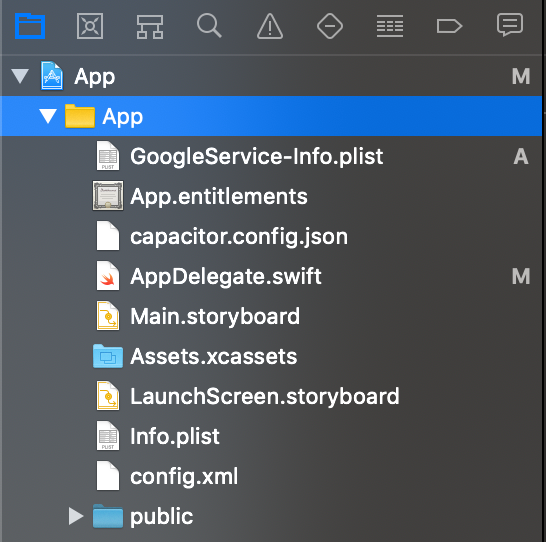
... 并按照 Firebase 的指示将 .plist 文件移动到您的 Xcode 项目中,确保将其添加到所有 target。
通过 CocoaPods 添加 Firebase SDK
iOS 上的 Push Notification API 使用 CocoaPods(一个 iOS 依赖管理系统),我们需要告诉 CocoaPods 使用 Firebase。
为此,我们需要修改 Podfile,它可以在 Xcode 中的 Pods 下找到:
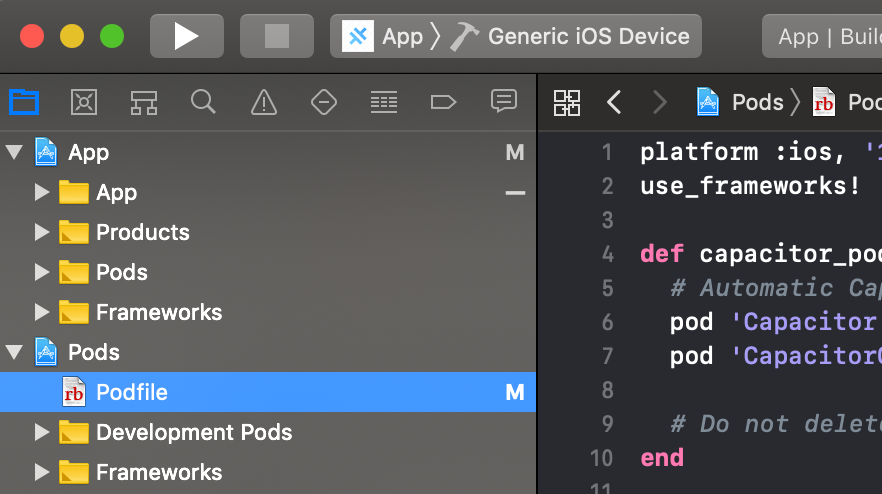
我们需要将 Firebase 添加到为我们的 App target 提供的 CocoaPods 中。为此,将 pod 'FirebaseCore' 和 pod 'Firebase/Messaging' 添加到您的 target 'App' 部分,如下所示:
target 'App' do
capacitor_pods
# 在此处添加您的 Pods
pod 'FirebaseCore', '7.11.0' # 添加此行
pod 'Firebase/Messaging', '7.11.0' # 添加此行
end
您的 Podfile 应该看起来像这样:
platform :ios, '11.0'
use_frameworks!

# 解决安装新 Cordova 插件后 Xcode 缓存 Pods 的问题,
# 需要 Product -> Clean Build Folder
# 需要 CocoaPods 1.6 或更新版本
install! 'cocoapods', :disable_input_output_paths => true

def capacitor_pods
  # 自动的 Capacitor Pod 依赖项,请勿删除
  pod 'Capacitor', :path => '../../node_modules/@capacitor/ios'
  pod 'CapacitorCordova', :path => '../../node_modules/@capacitor/ios'

  # 请勿删除
end

target 'App' do
  capacitor_pods
  # 在此处添加您的 Pods
  pod 'FirebaseCore', '7.11.0'
  pod 'Firebase/Messaging', '7.11.0'
end
更新项目
现在我们需要确保我们的 iOS 项目安装了正确的 Firebase CocoaPod。
注意:这部分可能需要一段时间,因为 CocoaPods 需要下载所有适当的文件/依赖项。
npx cap update ios
添加初始化代码
要在您的 iOS 应用启动时连接到 Firebase,您需要在 AppDelegate.swift 文件中添加以下内容。
首先,在文件顶部添加一个 import:
import FirebaseCore
... 然后在 AppDelegate.swift 文件的 application(_ application: UIApplication, didFinishLaunchingWithOptions) 方法中添加 Firebase 的配置方法。
FirebaseApp.configure()
您完成的 AppDelegate.swift 文件应该看起来像这样:
import UIKit
import Capacitor
import FirebaseCore

@UIApplicationMain
class AppDelegate: UIResponder, UIApplicationDelegate {

  var window: UIWindow?


  func application(_ application: UIApplication, didFinishLaunchingWithOptions launchOptions: [UIApplication.LaunchOptionsKey: Any]?) -> Bool {
    // 应用启动后的自定义覆盖点。
    FirebaseApp.configure()
    return true
  }
如果您希望从 iOS 接收 Firebase FCM token 而不是原始的 APNS token,您还需要在文件顶部添加两个新导入:
import FirebaseInstanceID // 在 import FirebaseCore 之后添加此行
import FirebaseMessaging
并将您的 AppDelegate.didRegisterForRemoteNotificationsWithDeviceToken 代码改为如下所示:
    func application(_ application: UIApplication, didRegisterForRemoteNotificationsWithDeviceToken deviceToken: Data) {
        Messaging.messaging().apnsToken = deviceToken
        InstanceID.instanceID().instanceID { (result, error) in
            if let error = error {
                NotificationCenter.default.post(name: Notification.Name(CAPNotifications.DidFailToRegisterForRemoteNotificationsWithError.name()), object: error)
            } else if let result = result {
                NotificationCenter.default.post(name: Notification.Name(CAPNotifications.DidRegisterForRemoteNotificationsWithDeviceToken.name()), object: result.token)
            }
        }
    }
将 APNS 证书或密钥上传到 Firebase
如果您从一开始就按照说明操作,您已经在 Apple Developer 门户中创建了 Apple APNS 证书或 APNS Auth Key。您需要将其中一个上传到 Firebase,然后 Firebase 才能与 APNS 通信并向您的应用程序发送推送通知。
要上传您的证书或认证密钥,请从 Project Overview 页面:
- 点击您的 iOS 应用程序,然后点击 Settings 齿轮图标。
- 在设置页面上,点击 Cloud Messaging 选项卡。
- 在 iOS app configuration 标题下,使用提供的 Upload 按钮上传您的 Auth Key 或证书。
发送测试通知
现在是最好玩的部分——让我们验证来自 Firebase 的推送通知在 Android 和 iOS 上是否正常工作!
我们需要启动我们的 Android 或 iOS 应用程序,以便 home.page.ts 页面能够注册和接收通知。
要在 Android Studio 中打开您的 Android 项目:
npx cap open android
要在 Xcode 中打开您的 iOS 项目:
npx cap open ios
项目打开后,使用 Android Studio 或 Xcode 的 Run 功能将应用侧载到您的设备上。应用应在主页上启动。
注意:在 iOS 上,您会看到一个弹出窗口,询问您是否允许应用的通知——请确保选择 Allow notifications!
如果您的应用成功注册并且您遵循了上述代码,您应该会看到一个带有成功消息的 alert!
现在我们将测试通知是否被我们的设备接收。要发送通知,在 Firebase 中,转到项目窗格中 Grow 标题下的 Cloud Messaging 部分。
接下来,选择 New Notification 按钮。
创建通知时,您只需要指定以下信息:
- 通知的文本
- 标题(仅 Android 必需,iOS 可选)
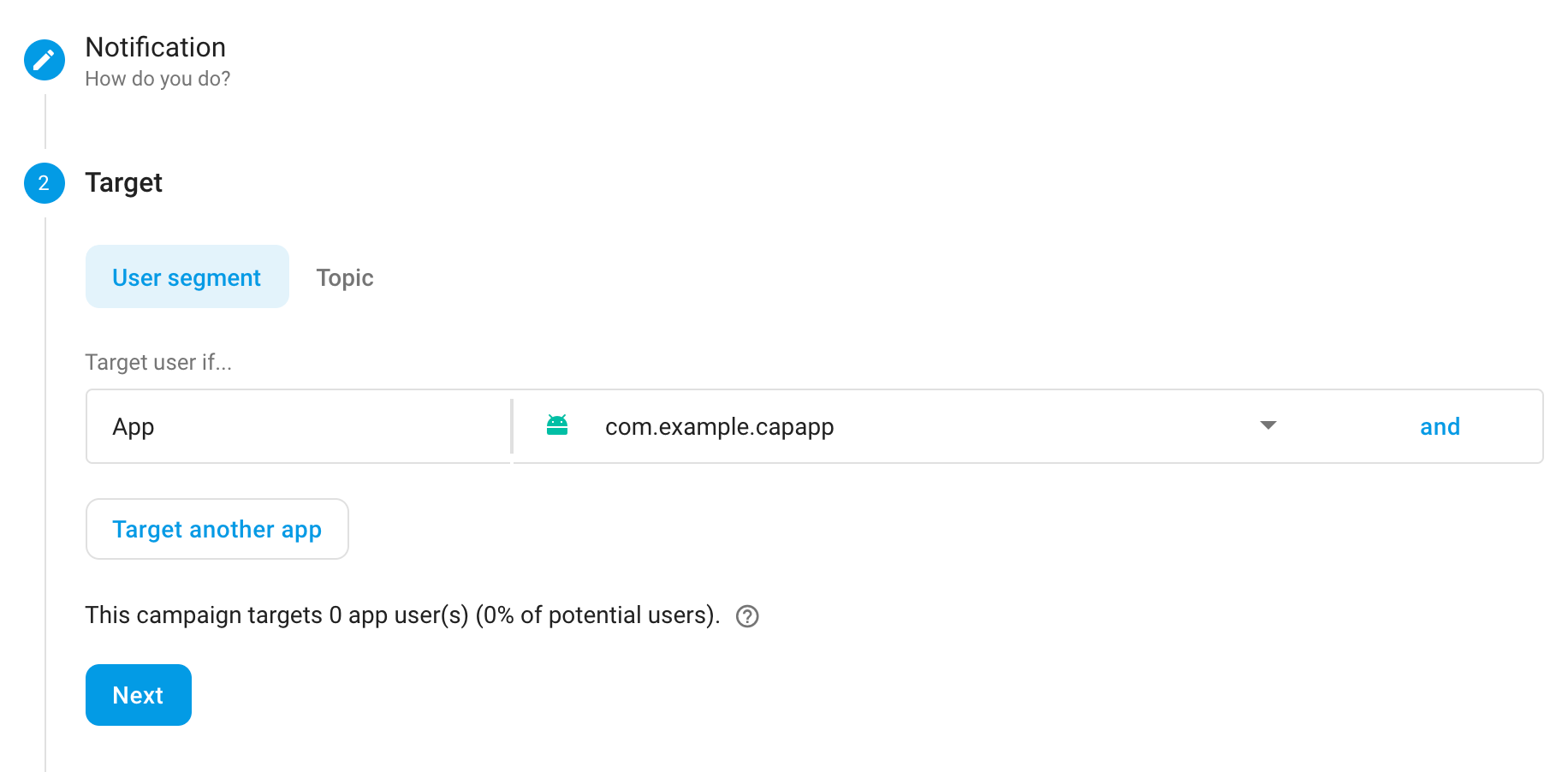
- 目标(用户段或主题;我建议只针对 iOS 或 Android 应用本身,见下图)
- 时间安排(保留为"Now")
此时,您可以 Review 您组合的通知,并选择 Publish 发送通知。
如果您正确设置了应用程序,您会在主屏幕上看到弹出 alert,显示您在 Firebase 中编写的推送通知。然后您可以点击通知,根据我们上面的代码,您应该会收到 pushActionPerformed 事件的 alert。